“We shape our tools, and thereafter our tools shape us.”
Our Sheriff Meeting, and the Myth of Crime-fighting Cameras
Despite the sheriff's claims, Cherokee's Flock network has not moved crime rates, nor helped to solve them.
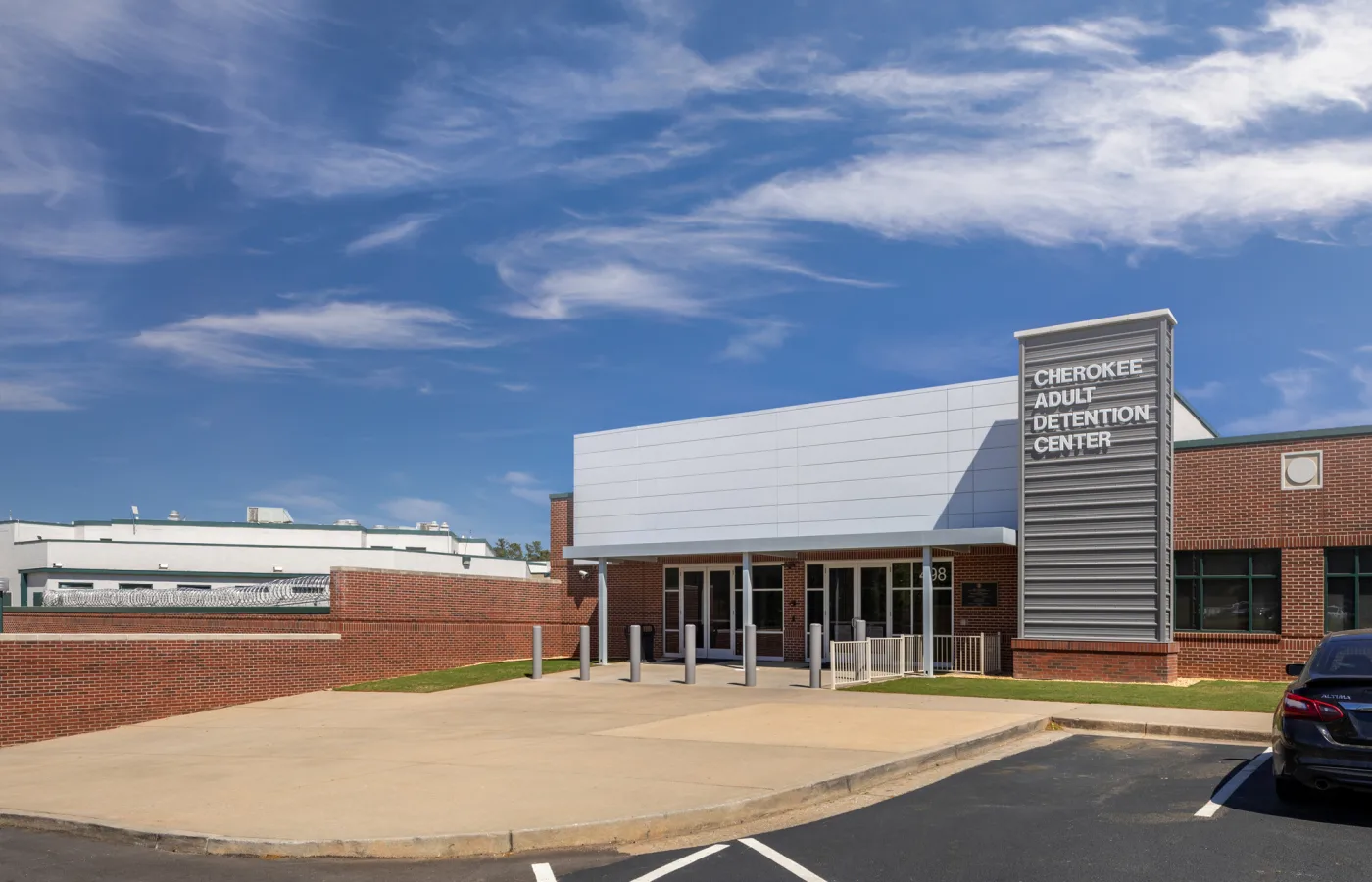
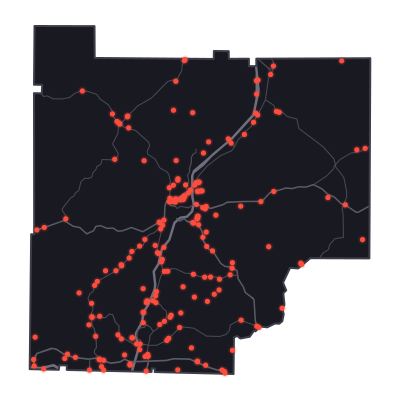
On September 9th, organizers of DeFlock Cherokee, along with other concerned citizens who asked to attend, sat down with Sheriff Frank Reynolds, Chief Deputy Thomas Pinyan and Director of Intelligence Lindsay Harris. For two hours, we described our concerns and supported them with data: that Flock's horrendous cybersecurity, scaled across the 2,004 organizations Cherokee County shares its data with, makes it quite simple for any hacker in the world to assemble comprehensive location history on any Cherokee County resident; that the staggering scale of police misuse will likely never be fully revealed by scattered audits; that Flock intentionally stokes narratives of fear to sell cameras; and so on.
To his credit, the sheriff didn't brush off our concerns. He recognizes the many issues inherent to Flock, and clearly wants to respond to public concern. Yet he maintains the belief that it's an indispensable crime-fighting tool. Hence why we were all handed printouts of crime statistics in Cherokee County, describing how, in 2015, there were 6,963 cases, a 53% case closure rate, and a 14% arrest rate. Ten years later, in 2025, after installing over a hundred Flock cameras, there were 13,765 cases, a 79% case closure rate and a 40% arrest rate.
At first glance, this data seems quite conclusive: Cherokee County is facing more crime than ever, and its police force is solving more cases now than before the Flock cameras were bought. Yet it seemed odd to us that 2015 was the only pre-Flock data point.
So we decided to dig into the data ourselves.
A history of crime in Cherokee
The FBI publishes monthly counts of offenses reported and offenses cleared for every agency in the US, on its online Crime Data Explorer. ("Clearance" essentially means crime that has been "solved," either by an arrest or dismissed due to "exceptional circumstances.") We invite you to search up the Cherokee County Sheriff's Office on there and check our work yourself.
Their first major contract with Flock, for the purchase of 28 ALPR cameras, was signed in November 2021. This date, in the context of the last 16 years of crime statistics in Cherokee County, is not a visible turning point.
Violent crime clearance has not effectively moved. It was 57.0% in 2015 and 58.4% in 2025. The best year in the FBI's data is 2019, at 93.2%, two years before the first major Flock contract. The worst year is 2022, at 53.4%, the first full year post-Flock. (Violent crime rates tend to spike and plummet year-to-year due to the relatively small size of a county; look at national violent crime rates, and the data is more stable.)
Property crime clearance did improve from 2015 to 2025, from 10.0% to 26.1%. However, when seen in context, 2015 was an abnormally weak year. The peak for property crime clearance was, in fact, 2019, at 26.7%: two years pre-Flock.
To be clear, we're not denying that officers of Cherokee County have solved serious crimes with Flock. What we are saying is that the sheriff's argument that Flock significantly improves case closure rates is not supported when looking at crime data holistically.
How dangerous is Cherokee County?
That's crime clearance rates. The second topic of concern is how common crime itself is in Cherokee County, regardless of whether or not it's solved. Is Cherokee County facing a wave of crime, as the number of cases would suggest? Do the Flock cameras make the would-be criminals of Cherokee think twice? The data suggests: neither.
In 2010, the Sheriff's Office recorded 13.75 index crimes (a category comprising serious offenses, divided into violent and property crime) for every thousand residents in its jurisdiction. By 2019, they reported 6.81: already half of the first number on record, falling at a steady rate of about 7% a year, two years before the first major Flock contract. The apparent break in the trend, 2020-2022, reflects a national dip and rebound in crime during the pandemic, after which the trend settled back onto its normal downward trajectory in 2023 and beyond.
The sheriff's figures describe cases nearly doubling from 2015 to 2025; yet over those ten years, index offenses fell by half, from 1,873 to 962. The raw number of cases, thus, does not necessarily correlate with how often serious crime is reported.
None of this is to downplay the work of Cherokee County police, nor do we want to claim that crime is not an issue. Our point is that the claims that there is a surge of crime in Cherokee County, and that Flock has visibly deterred crime, are not supported by the data.
Atlanta ran this failed experiment
| Offense | 2021 | 2025 |
|---|---|---|
| Criminal homicide | 53.4% | 48.0% |
| Rape | 37.7% | 37.7% |
| Robbery | 25.5% | 25.4% |
| Motor vehicle theft | 9.9% | 10.2% |
| Theft from vehicle | 1.4% | 2.8% |
We came to the meeting prepared with statistics of how Atlanta has not moved its clearance rates in the last five years. In response to this, the Chief Deputy simply asked us: "Are you DeFlock Atlanta, or DeFlock Cherokee?"
He was right that Cherokee County's crime data, as we have previously presented, is more relevant to the Cherokee County Sheriff's Office than Atlanta's. Yet if Cherokee wishes to continue down the path of mass surveillance, it is worthwhile to examine the most surveilled city in America.
Atlanta's camera network grew from roughly 3,300 cameras in November 2021 to 28,626 by July 2026, with more than five thousand Flock cameras among them. That is an eightfold increase, and thus makes the city the most comprehensive real-world test of the effectiveness of camera surveillance.
Clearance rates did not move. Homicide clearance actually fell. The Atlanta Community Press Collective, pulling from the same FBI database as us, presented this data, which you can see in the table to the right.
We thus reject any counterargument that we just need even more cameras, or better training with those cameras. If you want to see what our experiment looks like when multiplied by 50, look to our neighbors 40 miles south. The birthplace of Flock "Safety" has not become safer, nor its police more effective.
What we ask of Sheriff Reynolds
At the end of our meeting, we reiterated our commitment to permanently cancelling Cherokee County's Flock contract. In response, the sheriff asked all of us, individually: "If we took down the Flock cameras, and crime went up, would you be OK with that?"
This speaks to a misconception, intentionally spread by Flock's marketing team, that surveillance is a tradeoff between privacy and safety. In reality, it's the worst of both worlds: it entails horrific violations of our privacy, and, as the data shows, does not make any visible dent in crime or contribute to our safety.
The allure of Flock to law enforcement is obvious; the Chief Deputy described it to us as the greatest innovation in policing in his 30 years of service, and Flock's marketing team heralds it as the next era of policing. Yet we maintain, as the data shows, that the flashiness of the technology obscures its objective lack of effectiveness.
We thus renew our call to the sheriff to cancel the department's contract with Flock, and to take down the cameras in Cherokee County. We call upon the Sheriff's Office to not simply replace Flock with Axon Outpost, or any other surveillance company's products, as they all share the same problems. We call upon the Board of Commissioners to never again sign a mass surveillance contract, and if the day to renew one arrives, to expect us in the audience. We call upon the cities of Canton and Woodstock to cancel their respective Flock contracts, and forever close the door to mass surveillance in their jurisdictions. And we call upon every HOA and every private business that owns Flock cameras to then follow in the footsteps of the county and its cities, and seal Big Brother away as a failed experiment.
Join us
We are a local group of concerned residents fighting mass surveillance in Cherokee County. Interested in joining or getting in touch? Email us.